Revolutionizing Chile’s wine industry: Casa Silva’s groundbreaking Microterroir and Genome research projects
R e v o l u t i o n i z i n g C h i l e ’ s w i n e i n d u s t r y : C a s a S i l v a ’ s g r o u n d b r e a k i n g M i c r o t e r r o i r a n d G e n o m e r e s e a r c h p r o j e c t s
Los Lingues Vineyard, Colchagua Valley, Chile
The wine industry has always been fascinated by the concept of terroir, the idea that the environment in which grapes are grown can significantly influence the flavor and aroma characteristics of the resulting wine. In recent years, winemakers have become increasingly interested in the concept of microterroir, i.e. the idea that even small differences in soil composition, exposure to sunlight and other environmental factors can profoundly influence the final product.
THE MICRO-TERROIR PROJECT
In 2005, Casa Silva, one of Chile’s leading wine producers, decided to go a step further in its knowledge of micro-terroir by launching an innovative research project in collaboration with the University of Talca. The objective of the three-year project was to explore why vines grown under apparently identical conditions in small plots within the same vineyard could produce wines with different characteristics.
The Micro-Terroir research project was the first in Latin America and the second in the world. The research consisted of determining the optimal elements necessary for a micro-terroir plot to produce the best quality Carmenere, Cabernet Sauvignon, Syrah, Viognier and Petit Verdot grapes. The results of the research allowed Casa Silva to replant its vineyards with greater precision and to separate the different quality potential of micro-terroir plots of only 0.1 hectares.
Through microvinification, the winemaking team optimized quality and selected precise mini-lots of each variety for its best wines. Quality improvements were evident and learning was shared with the Chilean wine industry.
However, the Micro-Terroir research project also revealed unexplained variations in Carmenere quality and characteristics in up to 25% of the micro-plots studied, suggesting that clonal differences may be at play. In response, Casa Silva conducted further in-depth research to identify and select the best Carmenere clones, and the Genome Project was initiated.
THE GENOME RESEARCH PROJECT
The objective was to unravel the DNA of Chile’s most emblematic grape variety in order to continue improving its development nationally and globally. Seventy-two different Carmenere phenotypes from different valleys of the country were studied, planted in a special experimental vineyard at Casa Silva’s Los Lingues estate in the foothills of the Andes. Experts from the Universidad de Talca, the Universidad Federico Santa María and the Max Planck Institute in Germany worked under the direction of Mario Geisse, technical director of Casa Silva, to identify the Carmenere clone or clones that enhance the best characteristics of the variety.
The study was carried out with the most modern research technologies in the area, as part of a research project related to grapevine functional genomics. The aim of this study was to determine, in part, through molecular genetic techniques, metabolic analysis and phenotypic analysis, the real genetic diversity of the Carmenere cultivar in Chile.
The team found an optimal balance between vegetal and herbaceous characters; more homogeneous fruit flavors, good structure and better perceived acidity. They also aimed to minimize millerandage problems that can cause significant vintage variations in Carmenere wines.
In addition, the team discovered that of all the number of accessions or possible clones of Carmenere thought to exist in Chile, there are only two groups or clones clearly identified, genetically, phenotypically and metabolically.
Consequently, a detailed metabolomic analysis (molecular study) yielded similar results, confirming the existence in Chile of these two groups and authenticating the low genetic diversity of this strain in Chile, especially when compared with that of the other cultivars present in our country.
This is probably the result of a limited diversity of materials originally introduced to the country in the last century. Everything seems to indicate that most of the Carmenere selections available in the country can be classified in these two genetic groups, which in practice limits clonal availability to two groups or simply to two clones.
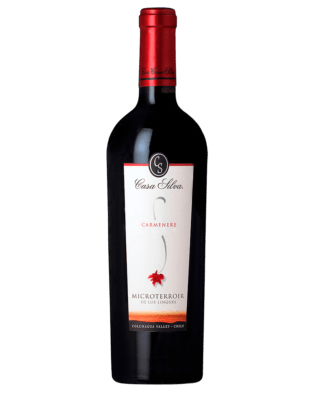
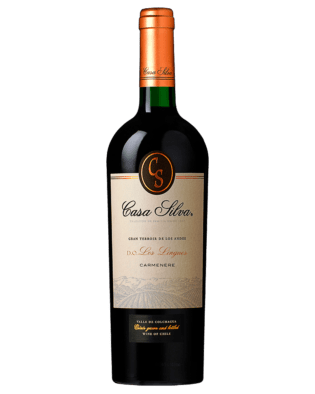
Casa Silva’s Micro-Terroir and Genome Research projects are pioneering examples of how science can be applied to improve wine quality. The research represents an important milestone for the Chilean wine industry, placing it firmly on the map as a source of high quality wines with unique and distinctive characteristics. The research has allowed Casa Silva to deepen its knowledge of the terroir of its vineyards and to produce more consistent and higher quality wines, such as the Microterroir Carmenere, a direct result of the studies.